Central AC Installation for Home Additions & Renovations in Sudbury

Cool your new space without overworking your old system

Central AC Installation for Home Additions & Renovations in Sudbury is built for homeowners who added a sunroom, finished a basement, or knocked out a wall and now find the back of the house never cools. We size the load, extend or replace the ductwork, and tie the new space into your central air so every room holds the same temperature. Book a load calculation before next summer.

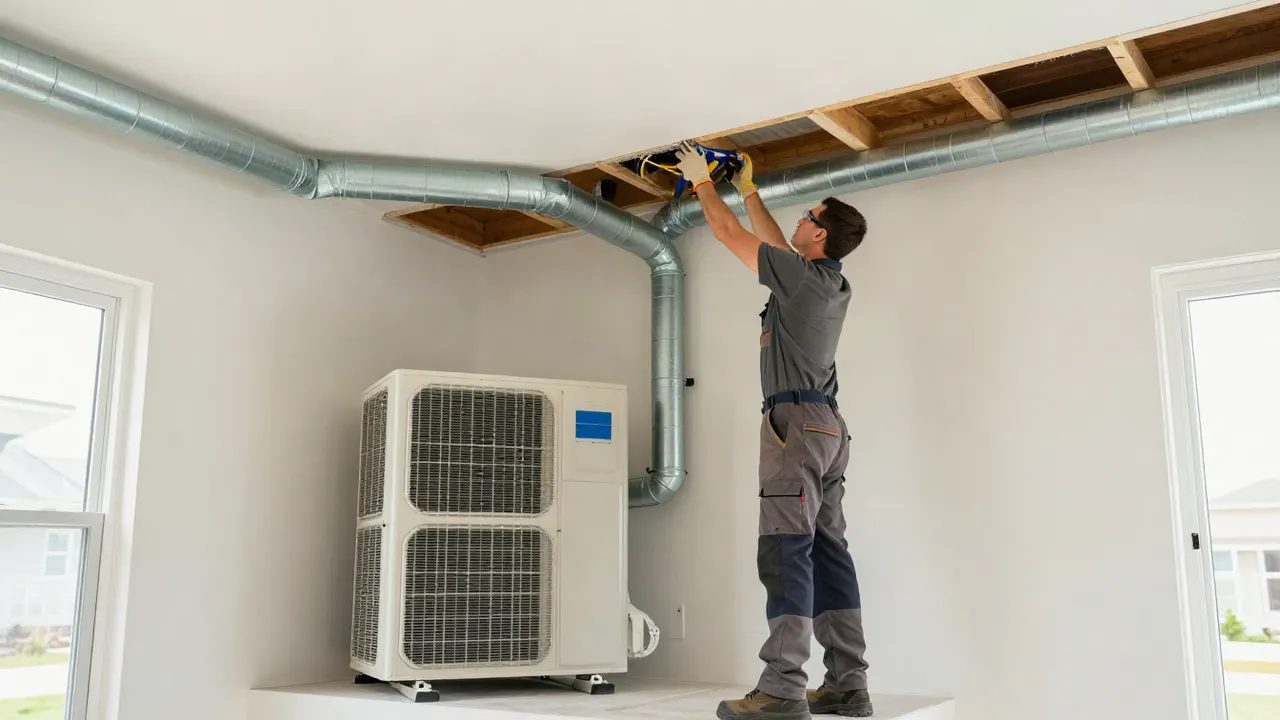
Central AC Installation for Home Additions & Renovations in Sudbury: HVAC technician extending existing main ductwork into a

Central AC Installation for Home Additions & Renovations in Sudbury

Central AC Installation for Home Additions & Renovations in Sudbury is the work of extending, resizing, or rebuilding a home's cooling system so a new or renovated space gets the same comfort as the original house. That means a room-by-room heat gain calculation, a decision on whether your existing condenser and air handler can carry the extra square footage, and ductwork that actually reaches the addition. Sometimes we extend the current system. Sometimes we add a zone. Sometimes the honest answer is a new, larger condenser paired with a matched evaporator coil.

Sudbury homeowners run into this most often after a garage conversion in Val Caron, a second-storey addition in the South End, or a finished basement in Minnow Lake. Our summers swing from cool nights to 30 C afternoons, and a system sized for the original footprint will short cycle trying to serve a space it was never built for. We handle central AC installation for home additions Sudbury wide, from Copper Cliff to Coniston, and we start every job with a Manual J load calculation rather than a guess.
Why Homeowners Extend Central Air Into Additions

A new room that never cools is the most common complaint we hear after a renovation. Here is what proper central AC installation for renovations Ontario homeowners actually get when the load math is done first.

Even Temperatures Throughout

A properly sized system holds every room within 1 to 2 C of the thermostat setpoint, including the addition. We balance airflow with a manometer and anemometer so the new space is not starved while the original rooms get blasted. No more closing vents in the hallway to force air into the back bedroom.

Lower Hydro Bills

An oversized or undersized unit runs longer and harder than it should. Matching capacity to the real load, and sealing leaky ducts with mastic sealant and UL 181 tape, typically trims cooling costs by 10 to 20 percent. We verify duct leakage with a duct blaster before we call the job done.

One Thermostat, Whole Home

We integrate the addition into your existing Ecobee or Nest thermostat, or set up a zoned system with its own sensor if the new space has different sun exposure. You get one app, one schedule, and no separate window unit humming in the corner of the sunroom all July.

Code-Compliant From Day One

Every install meets Ontario Building Code requirements and CSA Group standards, with ESA electrical permits pulled where the work touches wiring. We hold TSSA registration and ODP certification for refrigerant handling, so the R-410A or R-32 charge is recovered, weighed, and documented properly.

Central AC Installation for Home Additions & Renovations in Sudbury: HVAC technician extending existing main ductwork into a

How Our Installation Process Works

Five steps, from the first phone call to the day you switch the thermostat to cool. Most additions take one to three days on site, depending on whether we are extending existing ductwork or running new runs from scratch.

1

Load Calculation

We measure every room, check insulation levels, window orientation, and ceiling height, then run a Manual J heat gain calculation. This tells us exactly how many BTUs the addition adds and whether your current condenser can carry it. Takes about 90 minutes on site, and you get the numbers in writing before any equipment is ordered.

2

System Design

Based on the load, we spec the condenser, evaporator coil, and air handler, then lay out duct runs on paper. If your existing furnace blower cannot move enough air, we say so now rather than after install. You approve the design and the quote before we schedule the work.

3

Ductwork and Rough-In

We cut in new supply and return runs using sheet metal ductwork or flexible ductwork where access is tight, seal every joint with mastic sealant, and insulate runs through unconditioned space. In a finished basement or a second-storey addition, this is the messiest day. We tarp floors and haul debris out the same day.

4

Equipment Install

The condenser goes on a concrete equipment pad with proper clearance, the line set is bent and flared with a tube bender and flaring tool, and we braze with a nitrogen purge to prevent internal oxidation. We pull a deep vacuum with a vacuum pump and manifold gauge set, then weigh in the refrigerant charge to the ounce.

5

Commissioning and Walkthrough

We verify static pressure with a manometer, check temperature split across the coil, confirm the condensate drain flows freely through the PVC line, and walk you through the thermostat. You get the load calc, the equipment model numbers, and a filter schedule before we leave the driveway.

Central AC Installation for Home Additions & Renovations in Sudbury: HVAC technician extending existing main ductwork into a

Eight Years of Sudbury Addition Installs

Sudbury Central AC Installation has been installing and extending central air in Sudbury since 2018. In eight years we have worked on everything from 1970s side-splits in the West End to brand-new builds in Valley East, and additions are the jobs we know best. Our technicians hold Red Seal Refrigeration and Air Conditioning Mechanic certification and NATE certification, and we carry TSSA registration and HRAI certification. We pull ESA electrical permits on every job that touches wiring, and we follow Environmental Protection Act (Ontario) ODP certification rules for refrigerant handling. That means the person in your basement actually knows why the line set matters.

  • Red Seal Refrigeration and Air Conditioning Mechanic certification on every install crew
  • NATE-certified technicians who run Manual J load calculations on every addition
  • TSSA registration and HRAI certification for Ontario code compliance
  • ODP certification for R-410A and R-32 refrigerant recovery and charging
  • Eight years serving Sudbury, from Minnow Lake to Chelmsford and Val Therese

Why Sudbury Homeowners Choose Us for Addition AC

We are not the biggest HVAC company in Sudbury, and we do not try to be. We are the crew that shows up, runs the numbers, and tells you the truth about whether your existing system can handle the extra space.

Load Math Before Quotes

We will not quote a system without a Manual J calculation. That single step is why our installs hold temperature evenly and why we rarely get called back for hot rooms. If your existing condenser can carry the addition, we will tell you, even though it means a smaller invoice for us.

Ductwork Done Properly

Leaky ducts are the number one reason additions feel stuffy. We seal every joint with mastic sealant and UL 181 tape, insulate runs through cold space, and verify leakage with a duct blaster. It adds a day to some jobs and it is worth every hour.

Honest Pricing, No Surprises

You get a written quote with equipment model numbers, ductwork scope, and permit costs before we start. If we open a wall and find something unexpected, we stop and talk to you before doing anything that changes the price. That is how central AC installation for remodels Sudbury homeowners can budget for.

We Stand Behind the Work

Every central AC installation for a home addition in Minnow Lake or anywhere else in Sudbury comes with a workmanship warranty on top of the manufacturer warranty on equipment. If a room runs warm two summers later, call us and we will rebalance the airflow at no charge.

What You Get

What Our Addition AC Service Includes

Every addition job is different, but the core scope is consistent. Here is what is covered in a standard central AC installation for a home addition, and what we quote separately if your home needs it.

Manual J Load Calculation

Room-by-room heat gain calculation covering square footage, window area and orientation, insulation values, and ceiling height. This is the document that tells us how many BTUs your addition adds and whether your existing condenser can carry the load. You get a copy.

Ductwork Design and Installation

New supply and return runs sized to match your existing system's static pressure. Sheet metal ductwork for main trunks, flexible ductwork where access is tight, insulated through unconditioned space, and sealed with mastic sealant and UL 181 tape at every joint.

Equipment Supply and Install

Condenser, evaporator coil, and air handler if needed, set on a concrete equipment pad with proper clearance. Line sets are bent and flared, brazed with a nitrogen purge, and evacuated with a vacuum pump before charging. We use R-410A or R-32 refrigerant depending on the equipment.

Refrigerant Charge and Verification

We weigh in the charge to the exact nameplate specification using a manifold gauge set and digital scale. Then we verify the temperature split across the evaporator coil and check static pressure with a manometer. If the numbers are off, we adjust before we leave.

Permits and Code Compliance

ESA electrical permits where the work touches wiring, TSSA registration and ODP certification for refrigerant handling, and full Ontario Building Code compliance. We handle the paperwork so you are not chasing permits after the fact.

Thermostat Setup and Walkthrough

We integrate the addition into your existing Ecobee or Nest, or install a new smart thermostat if you do not have one. Then we walk you through the schedule, the filter change interval, and what to watch for in the first cooling season.

Solutions

Problems We Solve With Addition AC Installation

Most calls we get about additions come down to one of a handful of problems. Here are the ones we see most often in Sudbury, and how we fix them.

Problem

New room never reaches the thermostat setpoint

The addition stays 4 to 6 C warmer than the rest of the house all summer, making it unusable during July and August afternoons. Homeowners end up running a window unit that defeats the point of central air.

Solution

We run a Manual J load calculation to see exactly how many BTUs the room needs, then design duct runs sized to deliver that airflow. Often the fix is a dedicated return and a properly sized supply run, not a bigger condenser. We verify with an anemometer after install.

Problem

Existing AC short cycles after the addition

The system cools the original rooms fast, shuts off, and never runs long enough to pull humidity or reach the addition. You get a clammy house, higher hydro bills, and extra wear on the compressor.

Solution

Short cycling almost always means the system is oversized for the original load and undersized for the new one. We check the condenser model, blower capacity, and duct static pressure, then recommend either a matched replacement or a zoned setup that lets the addition cool independently.

Problem

Uneven cooling between floors after a second-storey addition

Heat stacks upstairs, so the new bedroom runs warm while the main floor is comfortable. Closing vents downstairs helps a little and throws the whole system out of balance.

Solution

We design for stack effect with dedicated upstairs returns, balanced supply runs, and zoning where the temperature gap is large. A manometer reading tells us whether the existing ducts can carry the extra airflow or need to be upsized.

Problem

Leaky ducts in the addition kill airflow

New duct runs through an unconditioned attic or crawlspace lose 20 to 30 percent of their cooling before the air reaches the room. The system works harder and the addition still feels stuffy.

Solution

We seal every joint with mastic sealant and UL 181 tape, insulate runs through cold space, and verify leakage with a duct blaster. This is often the difference between a room that cools and one that does not, and it costs far less than new equipment.

Use Cases

When You Need Addition AC Installation

01

You converted an attached garage into a living space in Val Caron or Garson and the new room has no ductwork at all.

Solution

We run new supply and return ducts from the existing trunk, size them to the room's load, and check whether your furnace blower can move the extra air. If it cannot, we spec a larger air handler or a dedicated split system for the addition.

Outcome

The converted garage holds the same temperature as the rest of the house, with no window unit and no separate thermostat to manage.

02

You finished a basement in Minnow Lake and want it cool in summer without freezing the main floor above.

Solution

We install a zoned system with motorized dampers and a separate thermostat for the basement, so it cools when you use it and the upstairs stays comfortable. Duct runs are routed through the joist space with flexible ductwork where access is tight.

Outcome

Basement stays at 21 C on demand, main floor stays balanced, and you are not paying to cool an empty rec room all day.

03

You added a second-storey bump-out in the South End and the new bedroom runs 5 C warmer than the main floor.

Solution

We run a load calculation, then design dedicated upstairs returns and balanced supply runs to overcome stack effect. Where the gap is large, we add a zone with its own thermostat so the upstairs can be controlled independently.

Outcome

Upstairs bedroom holds within 1 to 2 C of the setpoint, and the main floor is not over-cooled to compensate.

04

You built a sunroom or three-season room in Chelmsford and want it usable through July and August.

Solution

Sunrooms have high heat gain from glass, so we size the load carefully and often recommend a ducted split system dedicated to the space. That keeps the load off your main system and lets you cool the sunroom only when you are in it.

Outcome

A room that used to be unusable in midsummer becomes the space you actually use, without straining the rest of the house's AC.

Our Approach

Tools and Methods We Use

Tools & Equipment

Manifold gauge set and vacuum pump

Used to evacuate the line set and verify the refrigerant charge. We pull a deep vacuum to remove moisture and non-condensables before charging, which protects the compressor and the metering device.

Duct blaster and manometer

The duct blaster measures leakage in the duct system, and the manometer reads static pressure. Together they tell us whether your ducts can carry the extra airflow your addition needs, or whether they need upsizing.

Anemometer

Measures air velocity at each supply register so we can balance airflow room by room. This is how we confirm the addition is actually getting the CFM it was designed for, not just that the duct is connected.

Tube bender and flaring tool

Used to bend and flare copper line sets to exact angles without kinking or cracking the tubing. Clean flares are one of the biggest factors in preventing refrigerant leaks down the road.

Brazing torch and nitrogen regulator

We braze line set connections with a nitrogen purge flowing through the tubing. The purge prevents internal oxidation, which would otherwise flake off and clog the filter drier or metering device.

Digital multimeter

Used to check voltage, amperage draw, and capacitor health on the condenser and air handler. We verify the electrical side is within spec before commissioning the system.

Leak detector

Electronic and soap-solution leak detection on every joint after brazing. Refrigerant leaks are the most common cause of AC not cooling, and catching them at install is far cheaper than finding them next summer.

Methods

Manual J load calculation

The industry-standard method for sizing cooling equipment, covering square footage, window area and orientation, insulation, and internal gains. We run it room by room on every addition so the equipment matches the real load instead of a rule of thumb.

Manual D duct design

Sizes duct runs to deliver the right CFM at the right static pressure. This is what prevents the classic problem of a new room that has a duct but still does not cool, because the run is too small or too long.

Nitrogen purge brazing

Flowing nitrogen through the line set while brazing prevents copper oxide from forming inside the tubing. It is a small step that makes a real difference in system longevity, and we do it on every install.

Duct leakage testing

We pressurize the duct system with a duct blaster and measure leakage before and after sealing. Sealing with mastic sealant and UL 181 tape typically cuts leakage significantly, which shows up directly in how well the addition cools.

Local Service

How Addition AC Works in Sudbury

Sudbury's climate makes addition AC a bit different from what you would see in southern Ontario. Our summers swing hard, with cool nights and 30 C afternoons, and the shoulder seasons can flip from heating to cooling in the same week. That means a system sized only for peak heat will short cycle in June and September. We size for the whole season, not just the hottest day. The housing stock matters too. Pre-1980 homes in the West End and Copper Cliff often have undersized ducts and minimal insulation, so an addition to one of those homes needs more than just a new run. Newer builds in Valley East and Hanmer usually have better envelopes but tighter duct layouts, which changes how we route new runs. We pull ESA electrical permits on every job that touches wiring, and we follow TSSA and ODP rules for refrigerant handling. If you are looking for central AC installation for renovated homes in Sudbury Ontario, the process starts with a load calculation, not a catalogue.

Service Areas

Minnow Lake

Lots of garage conversions and finished basements here, which usually means running new duct runs through joist spaces. Flexible ductwork and careful sealing matter more than equipment size in most of these jobs.

Val Caron

Many 1990s and 2000s builds with attached garages that get converted to living space. The existing duct trunk is usually accessible, so extending the system is often the right call rather than adding a second unit.

South End

Second-storey additions are common, and stack effect makes the new upstairs rooms run warm. Dedicated upstairs returns and zoning are usually part of the design here.

Copper Cliff

Older housing stock with smaller duct systems and less insulation. Additions here often need duct upsizing alongside the new runs, and we check the furnace blower capacity carefully.

Valley East

Newer builds with tighter envelopes and modern duct layouts. Additions usually extend cleanly, but we still run a load calculation because the original system is often sized close to its limit.

Local Considerations

Wide summer temperature swings from cool nights to 30 C afternoons

Equipment sized only for peak heat will short cycle in cooler weeks, which wears the compressor and does not remove humidity well. We size for the full season and check the sensible and latent load separately.

Pre-1980 housing stock with undersized ductwork

Adding a duct run to an already-restricted system can starve the original rooms. We measure static pressure with a manometer before designing, and upsize the trunk when the numbers say we need to.

Stack effect in multi-storey additions

Heat rises, so upstairs additions run 4 to 6 C warmer than the main floor without dedicated returns and balanced supply runs. We design for it rather than trying to fix it after the fact.

Ontario Building Code and TSSA requirements for refrigerant work

Refrigerant handling, electrical permits, and duct installation all fall under Ontario rules. We hold TSSA registration, ODP certification, and pull ESA permits so the install passes inspection without a follow-up visit.

Transformation

Garage Conversion in Val Caron

Before

A family converted their attached garage into a rec room but left the ductwork untouched. The new room hit 30 C on July afternoons while the rest of the house sat at 22 C. A window unit ran constantly and still could not keep up.

After

We ran a load calculation, found the existing condenser had no headroom, and installed a matched system with two new supply runs and a dedicated return. The rec room now holds 22 C on the hottest day, and the window unit is gone.

Maintenance & Follow-up

Change the filter every 60 days during cooling season and book a spring tune-up to check the refrigerant charge and clean the condenser coil. That keeps the system running at design capacity for years.

Before

A finished basement rec room and guest bedroom had no cooling at all. The main floor was comfortable, but the basement was stuffy and humid all summer, and the homeowners were running a dehumidifier around the clock.

After

We installed a zoned system with motorized dampers and a separate thermostat for the basement. The basement now cools to 21 C on demand, the main floor stays balanced, and the dehumidifier is in storage.

Maintenance & Follow-up

Keep the basement zone off when it is not in use to save energy, and have the dampers checked at the annual tune-up. Clean or replace the filter on the same schedule as the main system.

Before

A new upstairs bedroom and bathroom ran 5 C warmer than the main floor all summer. Closing vents downstairs helped the bedroom slightly but made the kitchen uncomfortable, and the homeowners were frustrated after spending on the addition.

After

We designed dedicated upstairs returns and balanced supply runs to overcome stack effect, and added a zone with its own thermostat. The upstairs now holds within 1 to 2 C of the setpoint, and the main floor is no longer over-cooled.

Maintenance & Follow-up

Leave the upstairs zone on its own schedule during cooling season, and check the return grille for blockages. A spring tune-up confirms the refrigerant charge and the blower is moving the designed CFM.

Frequently Asked Questions

Have questions? We have answers.

Call Us
Can I extend central AC to a home addition in Sudbury Ontario?

Yes, in most cases. Whether we extend your existing system or add a second zone depends on how much capacity your current condenser has left and how far the addition sits from the air handler. A 200 sq ft addition usually needs 4,000 to 6,000 BTUs of extra cooling. We run a Manual J load calculation first, then tell you whether extending, adding a zone, or upgrading the condenser is the right call.

How much does central AC installation cost for a home addition in Sudbury?

Typical 2026 pricing in Sudbury runs $3,500 to $9,500 for an addition, depending on whether we extend existing ductwork or run new runs, and whether your current condenser can carry the load. Extending ducts and adding a zone sits at the lower end. A new condenser, coil, and air handler pushes toward the top. You get a written quote with model numbers before we start.

Will my existing central AC handle a new addition in Sudbury Ontario?

Sometimes yes, often no. A system sized for a 1,500 sq ft house usually has 10 to 20 percent headroom, which covers a small addition but not a garage conversion or a full second storey. We check the condenser model number, the blower capacity, and the duct static pressure. If the numbers say your system is already near its limit, we will tell you before you spend money on a duct extension that will not work.

Who installs central AC for renovations near me in Sudbury Ontario?

We do. Sudbury Central AC Installation has been extending and installing central air in Sudbury since 2018, with Red Seal and NATE-certified technicians and TSSA registration. We cover New Sudbury, the South End, Minnow Lake, Valley East, Hanmer, Val Caron, Garson, Lively, Chelmsford, Azilda, Kingsmount, the West End, Copper Cliff, Coniston, and Val Therese. Call us and we will book a load calculation at your home.

Trust & Credentials

Credentials and Reviews

Certifications

Red Seal Refrigeration and Air Conditioning Mechanic by Red Seal Program (Canada)
NATE certification by North American Technician Excellence
TSSA registration by Technical Standards and Safety Authority (Ontario)
HRAI certification by Heating, Refrigeration and Air Conditioning Institute of Canada
ODP certification by Environmental Protection Act (Ontario)

Reviews

Google

Ran a proper load calculation before quoting, which no one else did. Told us our old condenser could not handle the addition and showed us the numbers. Installed a matched system with new duct runs and sealed everything properly. The new room holds temperature perfectly. Worth every dollar.

Google

Zoned system for our finished basement. Clean install, pulled the ESA permit, and walked us through the Ecobee setup. The basement cools when we use it and the main floor stays comfortable. Eight years in business and it shows in how they work.

BBB

Second-storey addition and every other contractor said just add a window unit. These guys measured the space, checked duct static pressure, and extended the system properly. Cost less than a full replacement and the upstairs is now the coolest room in the house.

Google

Honest advice from the first call. They told us what we did not need as clearly as what we did. Ductwork was sealed properly, the line set was brazed with nitrogen, and they verified the charge before leaving. No callbacks, no issues two summers later.

Related Services

Central Air Conditioner Installation

If your addition needs a full new system rather than an extension, we install the condenser, coil, and air handler as a matched set. Every unit is sized to the whole house, not just the new square footage, so the original rooms keep cooling the way they always did.

Central Air Conditioner Installation

Central AC Replacement

When an addition pushes an aging condenser past its limit, replacement is often cheaper than trying to extend it. We swap the outdoor unit and matched indoor coil, reuse sound ductwork, and bring the refrigerant charge up to spec with R-410A or R-32.

Central AC Replacement

High-Efficiency Central AC Installation

Additions are a good time to upgrade to a high-efficiency unit, especially if you are already replacing the condenser. Higher SEER ratings cut summer hydro costs and often qualify for rebates. We spec Lennox, Carrier, Trane, and Daikin options and show you the payback math.

High-Efficiency Central AC Installation

New Construction Central AC Installation

Building an addition from the ground up means we can design ductwork into the framing instead of cutting into finished walls later. We work with your builder to route runs, set the equipment pad, and rough in the line set before drywall goes up.

New Construction Central AC Installation

Central AC Installation for Older Homes

Sudbury has a lot of pre-1980 housing stock with undersized ducts and minimal insulation. Additions to those homes need extra care, because the existing system is often already working hard. We assess the whole envelope before recommending equipment.

Central AC Installation for Older Homes

Ducted Split System Installation

A ducted split is the standard setup for most Sudbury additions: outdoor condenser, indoor coil on the furnace or air handler, and ductwork carrying cooled air to every room. We match components so the system runs as designed, not as a collection of mismatched parts.

Ducted Split System Installation

Split-System Central AC Installation

For additions that sit far from the main duct trunk, a split system with its own air handler can be the cleaner answer. It cools the new space independently and takes load off your existing system instead of straining it.

Split-System Central AC Installation

Central AC System Design & Sizing

Sizing is the single biggest factor in whether an addition cools evenly. We run Manual J load calculations room by room, then design duct layout and equipment selection around the real numbers. This is the service that prevents the hot-room complaint.

Central AC System Design & Sizing

Central AC Installation for Multi-Storey Homes

Heat stacks upstairs, so a second-storey addition almost always runs warmer than the main floor. We design for that with dedicated returns, balanced supply runs, and zoning where it makes sense, so the upstairs bedroom is not 5 C warmer than the kitchen.

Central AC Installation for Multi-Storey Homes

Zoned Cooling System Installation

If your addition has different sun exposure or is used at different hours than the rest of the house, zoning lets you cool it independently. Motorized dampers and separate thermostats mean you are not paying to cool an empty bonus room all day.

Zoned Cooling System Installation

Ductwork Design

New duct runs have to match the existing system's static pressure or the whole house suffers. We design trunk and branch layouts with proper sizing, then verify with a manometer after install. Sheet metal for main runs, flexible ductwork where access is tight.

Ductwork Design

Modification & Sealing

Sometimes the answer is not new ducts but fixing the ones you have. We seal leaking joints with mastic sealant and UL 181 tape, insulate runs through cold space, and rebalance airflow. This alone fixes a surprising number of warm-room complaints.

Modification & Sealing

Air Handler & Evaporator Coil Installation

The indoor half of your AC matters as much as the outdoor unit. We install matched air handlers and evaporator coils, set the correct blower speed for your ductwork, and check the temperature split across the coil before we leave.

Air Handler & Evaporator Coil Installation

Smart Thermostat Installation & Integration

We wire and configure Ecobee and Nest thermostats so your addition is on the same schedule as the rest of the house. Remote sensors let the thermostat read the new room instead of the hallway, which fixes a lot of uneven-cooling complaints.

Smart Thermostat Installation & Integration

Central AC Condenser Unit Installation

The condenser is the outdoor half of the system, and placement matters in Sudbury. We set it on a concrete equipment pad with proper clearance from walls and shrubs, then charge the system to the exact weight on the nameplate.

Central AC Condenser Unit Installation
Testimonials

What Sudbury Homeowners Say

Real experiences from customers who chose our Central AC Installation for Home Additions & Renovations services

We converted our attached garage into a family room and the rest of the house was fine, but the new room was unbearable in July. Sudbury Central AC Installation ran a load calculation, told us our old condenser could not carry it, and installed a new matched system with two extra duct runs. The garage room now holds 22 C on the hottest day. They sealed the ducts properly and showed us the leakage test results.

Marc L.

Homeowner, Val Caron

M

We finished our basement and wanted AC down there without freezing the main floor. They set up a zoned system with its own thermostat, so the basement cools when we use it and the upstairs stays comfortable. The crew was tidy, pulled the ESA permit, and walked me through the Ecobee setup. Eight years in business and it shows in how they work.

Jennifer P.

Homeowner, Minnow Lake

J

Second-storey addition, and every contractor told us to just add a window unit. These guys actually measured the space, checked our duct static pressure, and extended the existing system with new runs and a bigger return. Cost less than a full replacement and the upstairs bedroom is now the coolest room in the house. Honest advice from start to finish.

Dave R.

Homeowner, South End

D

We converted our attached garage into a family room and the rest of the house was fine, but the new room was unbearable in July. Sudbury Central AC Installation ran a load calculation, told us our old condenser could not carry it, and installed a new matched system with two extra duct runs. The garage room now holds 22 C on the hottest day. They sealed the ducts properly and showed us the leakage test results.

Marc L.

Homeowner, Val Caron

M

We finished our basement and wanted AC down there without freezing the main floor. They set up a zoned system with its own thermostat, so the basement cools when we use it and the upstairs stays comfortable. The crew was tidy, pulled the ESA permit, and walked me through the Ecobee setup. Eight years in business and it shows in how they work.

Jennifer P.

Homeowner, Minnow Lake

J

Book Your Central AC Installation for Home Additions & Renovations in Sudbury

If your new room never gets cool, the fix starts with a load calculation, not a bigger unit. We have been doing this in Sudbury since 2018, with Red Seal and NATE-certified technicians on every install. Call us and we will book a visit to measure your space and give you real numbers.